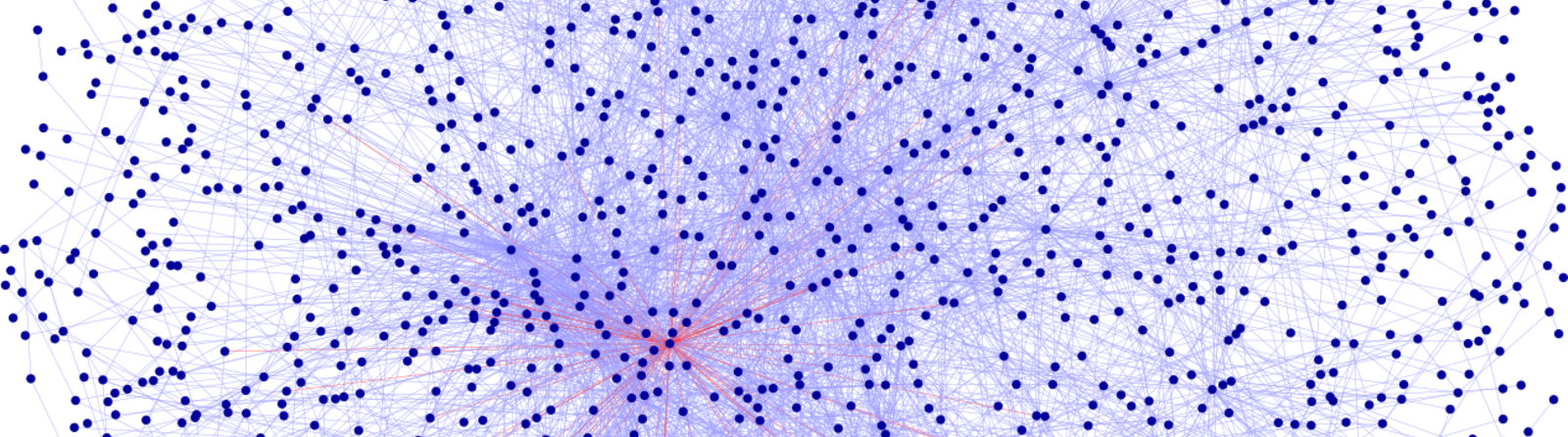
Systems Biomedicine
Team Leader
A. BAUDOT
A. BAUDOT
PhD position: Computational approaches for neuromuscular junction organoids
Keywords: Organoids, Neuromuscular junction, Multi-omics data integration, Graph-based learning, Neuromuscular diseases
Organoids are self-organizing 3D tissue models derived from human stem cells that recapitulate key aspects of organ development and function. They have emerged as powerful biological systems for studying organ and tissue development, disease mechanisms, and drug responses. Neuromuscular junction (NMJ) organoids are particularly relevant models for studying neuromuscular diseases.
The study of organoids generates a lot of heterogeneous and multiscale data, from single-cell multi-omics and spatial transcriptomics to imaging and functional readouts. Yet, computational tools capable of analyzing and integrating such complex and heterogeneous data are still lacking. They are however essential to build a comprehensive view of NMJ organoid function across healthy and disease contexts.
We propose a PhD project to develop such computational approaches. We will use strategies based on multiscale modeling and multimodal data integration, using data from the literature and produced by collaborators. Central to this project, we aim to develop graph-based approaches that integrate prior biological knowledge with multi-modal experimental data. Graphs can encode biological entities and their relationships (such as gene regulatory networks, signaling pathways, and cell-cell communication mechanisms). They can serve as a reasoning backbone for graph-based learning approaches, enabling the analysis and interpretation of complex biological data.
In the longer term, we expect these computational models to deepen our understanding of neuromuscular pathologies, help identify molecular signatures associated with these diseases, and contribute to predicting patient response to treatment.
What we offer:
This project will be conducted in close collaboration with NMJ biologists experts in organoids in healthy and disease contexts. The PhD student will be integrated in the Systems Biomedicine team hosted at the Marseille Medical Genetics Institute. The PhD will be supervised by Anaïs Baudot (PhD, HDR) with co-supervision of Marie-Galadriel Brière (PhD, Computational Biology Team, Marseille Developmental Biology Institute). The Systems Biomedicine team has established expertise in multi-omics data integration [Cantini et al. 2021 ; Hirst et al. 2025], network analysis and embedding [Baptista et al. 2024 ; Brière et al. 2025], and organoid single-cell data analysis [Argiro et al. 2024] providing a strong methodological foundation for the proposed project. The student will be involved in the digital twin of organoids research axis of the team and will have the opportunity to work in close collaboration with other students and postdocs working on complementary aspects of the project. The team has dedicated financial support for computational resources, conference attendance, and collaborative travel.
[ Argiro et al. 2024] Argiro, L., Chevalier, C., Choquet, C., Nandkishore, N., Ghata, A., Baudot, A., ... & Lescroart, F. (2024). Gastruloids are competent to specify both cardiac and skeletal muscle lineages. Nature Communications, 15(1), 10172.
[Baptista et al. 2024] Baptista, A., Brière, G., & Baudot, A. (2024). Random walk with restart on multilayer networks: from node prioritisation to supervised link prediction and beyond. BMC bioinformatics, 25(1), 70.
[Brière et al. 2025] Brière, G., Stosskopf, T., Loire, B., & Baudot, A. (2025). Benchmarking the Impact of Data Leakage on the Performance of Knowledge Graph Embedding Models for Biomedical Link Prediction. bioRxiv, 2025-01.
[Cantini et al. 2021] Cantini, L., Zakeri, P., Hernandez, C., Naldi, A., Thieffry, D., Remy, E., & Baudot, A. (2021). Benchmarking joint multi-omics dimensionality reduction approaches for the study of cancer. Nature communications, 12(1), 124.
[Hirst et al. 2025] Hirst, D. P., Térézol, M., Cantini, L., Villoutreix, P., Vignes, M., & Baudot, A. (2025). MOTL: enhancing multi-omics matrix factorization with transfer learning. Genome Biology, 26(1), 224.
Profile and skills required:
We are looking for a candidate with strong analytical and computational skills, with the ability to communicate effectively with biologists and to engage with the biological questions at the heart of the project.
We hence seek for PhD students with either:
How to apply:
Applications can be sent directly to “anais.baudot – at – univ-amu.fr” and "marie-galadriel.briere – at – univ-amu.fr". Please make sure your application includes a cover letter, a detailed CV, your master grades, and the contact information for 2 or more references. Review of applications begins immediately and will continue until the position is filled.
Starting date: autumn 2026.
Mail:
Telephone: 04 91 32 49 48
POST-DOC
Mail:
DR2 CNRS
Mail:
Telephone: 04 91 32 49 48
IE
Mail:
POST-DOC
Mail:
DOCTORANT(E)
Mail:
DOCTORANT(E)
Mail:
DOCTORANT(E)
Mail:
POST-DOC
Mail:
Mail:
CRCN
Mail:
IE
Mail:
PI
Mail:
Telephone: 0678949229
IR
Mail: